M1941 1st Jump JKT 2218 | Green
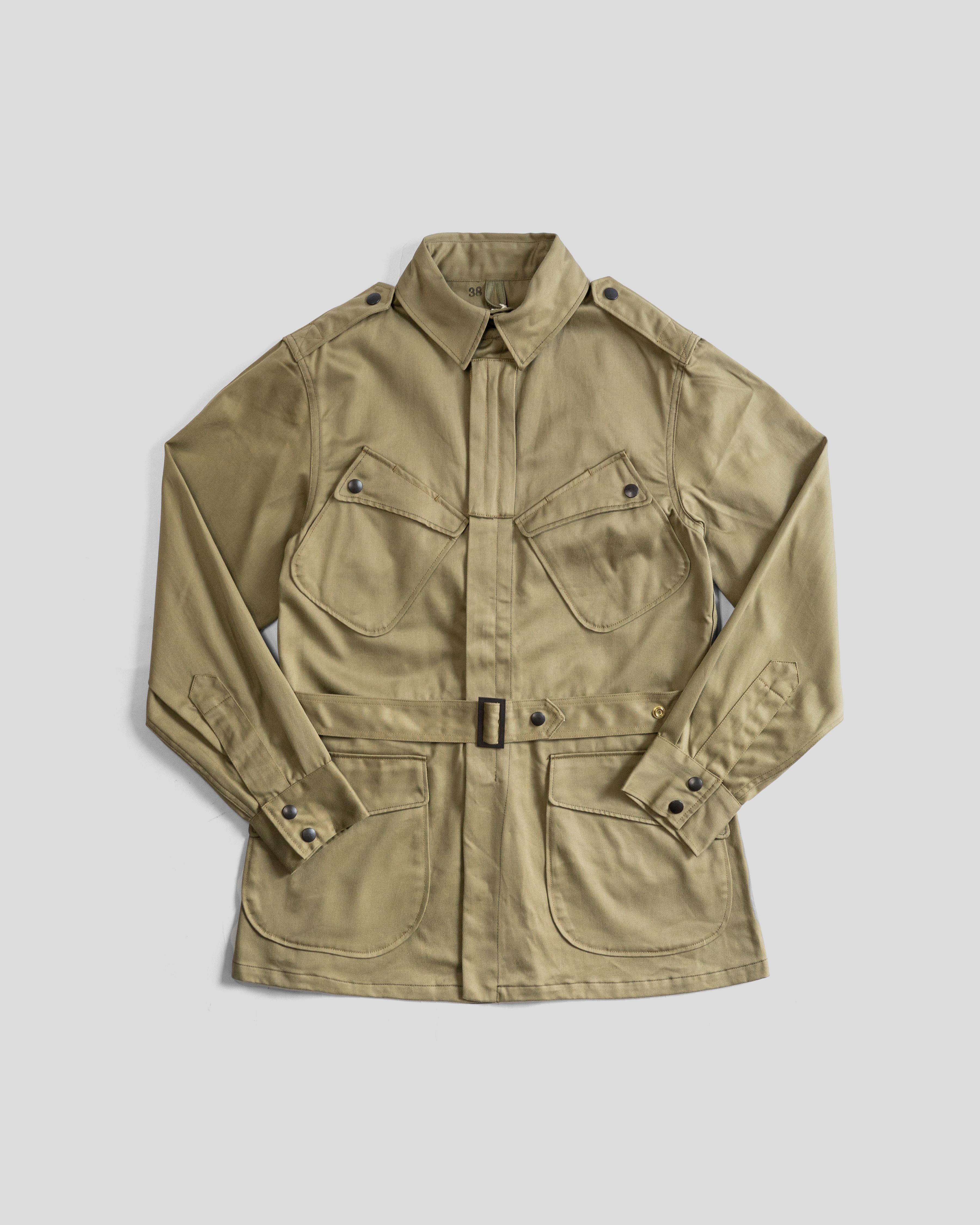
The first U.S. military paratroopers were created in 1940. The jacket and trousers were replaced by a two-piece jacket and trousers instead of the unpopular tuna-type all-in-one during training. This M41 airborne jumpsuit was the predecessor to the more widely used (during World War II) M42 jumpsuit; the M41 jump jacket and jump pants were briefly produced in 1941, but it was later decided that changes needed to be made to the airborne jumpsuit. These changes were incorporated into the M42 jumpsuit; the biggest difference between the M41 jumpsuit and the M42 jumpsuit is the pockets; the M41's pockets were sewn flat into the jacket and pants, so it was not possible to put much in the pockets. So the decision was made to make the pockets expandable, similar to those found in modern cargo pants and shorts, and that change was implemented in the M42 suit. In addition, the pockets of the M41 jump jacket had only one snap to close each. This was deemed inadequate, and when production of the M42 suit began, each jacket pocket had two snaps; the M41 jump suit was only issued for a short period of time, and since the U.S. Airborne forces were small at the time, not many were made. For this reason, most of those in existence are M42 or later, and the M41 does not seem to have been introduced in any magazine or other publication.
The first U.S. military paratroopers were created in 1940. The jacket and trousers were replaced by a two-piece jacket and trousers instead of the unpopular tuna-type all-in-one during training. This M41 airborne jumpsuit was the predecessor to the more widely used (during World War II) M42 jumpsuit; the M41 jump jacket and jump pants were briefly produced in 1941, but it was later decided that changes needed to be made to the airborne jumpsuit. These changes were incorporated into the M42 jumpsuit; the biggest difference between the M41 jumpsuit and the M42 jumpsuit is the pockets; the M41's pockets were sewn flat into the jacket and pants, so it was not possible to put much in the pockets. So the decision was made to make the pockets expandable, similar to those found in modern cargo pants and shorts, and that change was implemented in the M42 suit. In addition, the pockets of the M41 jump jacket had only one snap to close each. This was deemed inadequate, and when production of the M42 suit began, each jacket pocket had two snaps; the M41 jump suit was only issued for a short period of time, and since the U.S. Airborne forces were small at the time, not many were made. For this reason, most of those in existence are M42 or later, and the M41 does not seem to have been introduced in any magazine or other publication.
Original: $48,000.00
-65%$48,000.00
$16,800.00Description
The first U.S. military paratroopers were created in 1940. The jacket and trousers were replaced by a two-piece jacket and trousers instead of the unpopular tuna-type all-in-one during training. This M41 airborne jumpsuit was the predecessor to the more widely used (during World War II) M42 jumpsuit; the M41 jump jacket and jump pants were briefly produced in 1941, but it was later decided that changes needed to be made to the airborne jumpsuit. These changes were incorporated into the M42 jumpsuit; the biggest difference between the M41 jumpsuit and the M42 jumpsuit is the pockets; the M41's pockets were sewn flat into the jacket and pants, so it was not possible to put much in the pockets. So the decision was made to make the pockets expandable, similar to those found in modern cargo pants and shorts, and that change was implemented in the M42 suit. In addition, the pockets of the M41 jump jacket had only one snap to close each. This was deemed inadequate, and when production of the M42 suit began, each jacket pocket had two snaps; the M41 jump suit was only issued for a short period of time, and since the U.S. Airborne forces were small at the time, not many were made. For this reason, most of those in existence are M42 or later, and the M41 does not seem to have been introduced in any magazine or other publication.